‘Improve the overall quality of life’ – CO4HUB discusses future urban logistics hubs in Helsingborg
Author & Photos: Joel Wolff
Members of the CO4HUB consortium gathered in Helsingborg on 4–5 May for the project’s first in-person consortium meeting. Through workshops and knowledge-sharing sessions, partners explored how future urban logistics hubs can become financially viable while contributing to more sustainable and liveable cities.
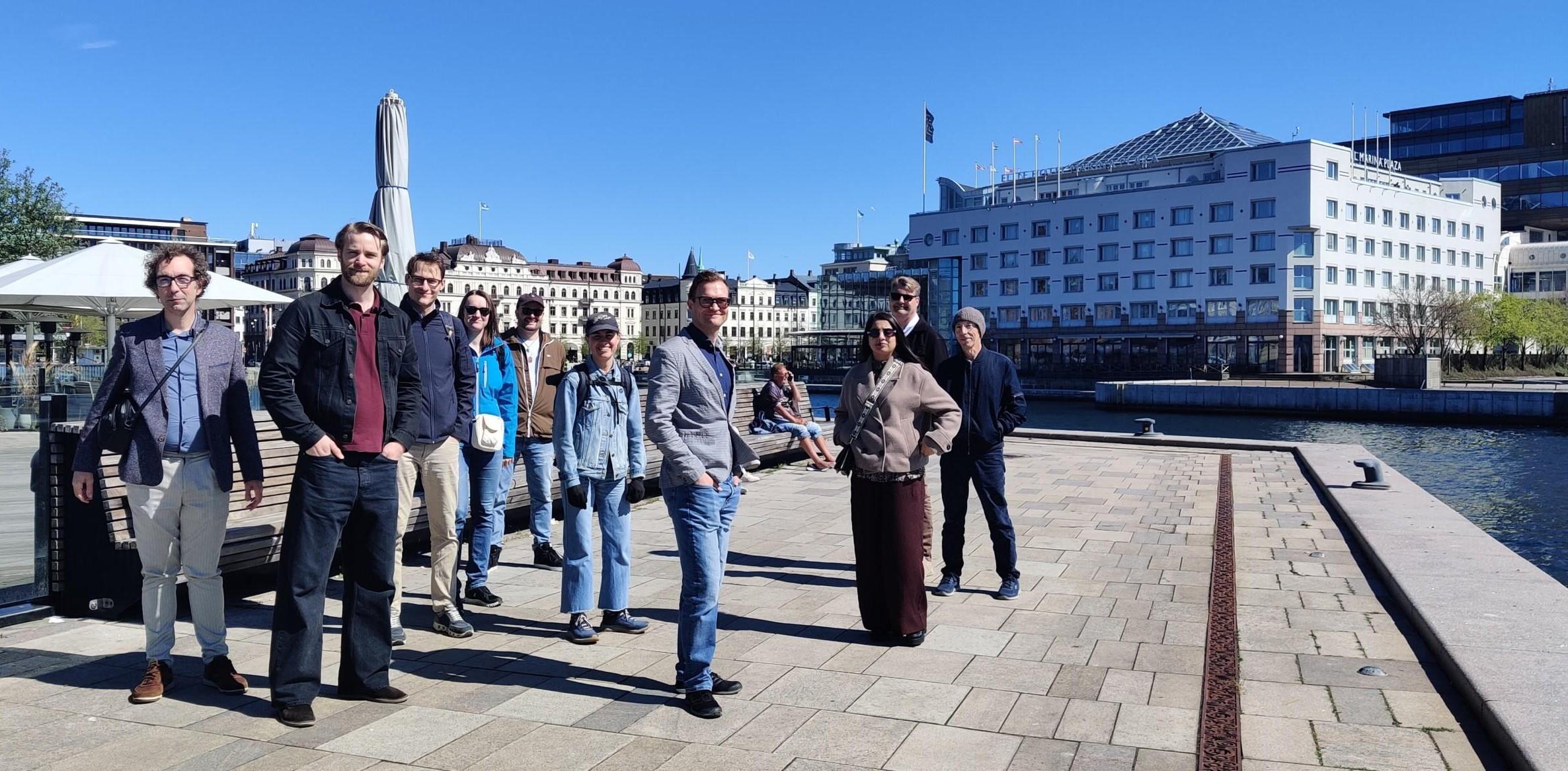
Twenty members of the Cooperation for Hubs in Urban Logistics (CO4HUB) project gathered on May 4–5 to share knowledge and discuss cooperation in the project. Hosted by Jan Magnusson from the City of Helsingborg, the majority participated on site, allowing them to meet in person for the first time during the project. Importantly, all four national contact points and the remaining work package leaders were present. However, many of the events during these days were organised in hybrid mode and were attended by remote participants.
At the centre for innovation, in the Oceanhamnen district, the meeting was kicked off on Monday, 4 May, with a general update by Project Coordinator Thomas Draschbacher from TU Graz. As the first in-person meeting, this update and the following dialogue were crucial to ensure that all members, normally dispersed around Europe, aligned their knowledge and expectations towards coordinated tasks.
“Everybody [in our city] talks about it, everybody says it’s needed, but nobody has an idea of how to finance it. … Everybody hopes for good input, but nobody wants to touch it and make it themselves.”
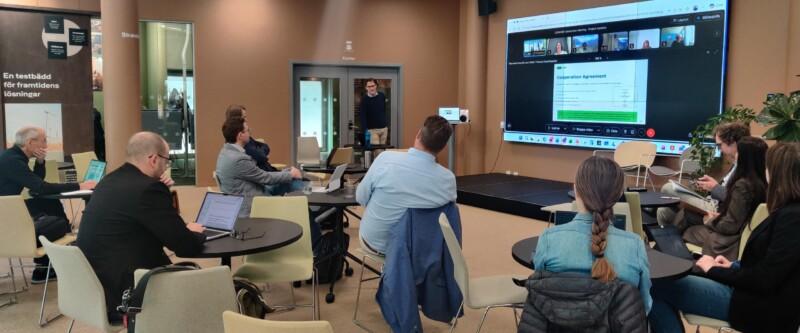
Figure: Consortium members working in hybrid at the centre for innovation.
The co-design work package lead, Adam Uhrdin from KTH, Stockholm, facilitated a cooperation workshop to create a deeper shared understanding of the challenges at hand and how to cooperate to solve them. Among some key takeaways were the notion that the potential benefits of urban logistics hubs (ULHs) are widely recognised and a common topic in urban logistics communities, but few know how to make them profitable. One of the consortium members stated that “Everybody talks about it, everybody says it’s needed, but nobody has an idea of how to finance it … Everybody hopes for good input, but nobody wants to touch it and make it themselves.”
“By combining different sorts of income, in that matter, from two different sectors, [we] could actually cover the costs of the hub.”
Consortium members with experience from the previous pilot programme Älskade stad, in Stockholm, were able to explain how they solved the funding problem. This pilot consolidated parcel deliveries and waste management and showed that with sufficient efficiency, the costs of the ULHs can be covered. One member stated, “By combining different sorts of income, in that matter, from two different sectors, [we] could actually cover the costs of the hub.” This type of key takeaway from previous pilots is crucial evidence of the potential of ULH solutions.
“Improve the overall quality of life.”
On Tuesday, 5 May, the consortium turned their attention to concrete practical matters to be solved in the local setting. While inspired by the Helsingborg location, a co-design workshop allowed members to explore challenges in urban settings and potential in ULHs. The workshop also explored potential value propositions provided by ULHs. One brave statement regarding this potential was that they may “improve the overall quality of life.” This summarises very well the shared sentiment and inspiration among the consortium members. The CO4HUB strongly believes that working, profitable solutions to consolidate urban logistics are within reach. The project pilots will soon test such solutions in practice to generate general knowledge on the design of strong and capable ULH solutions.
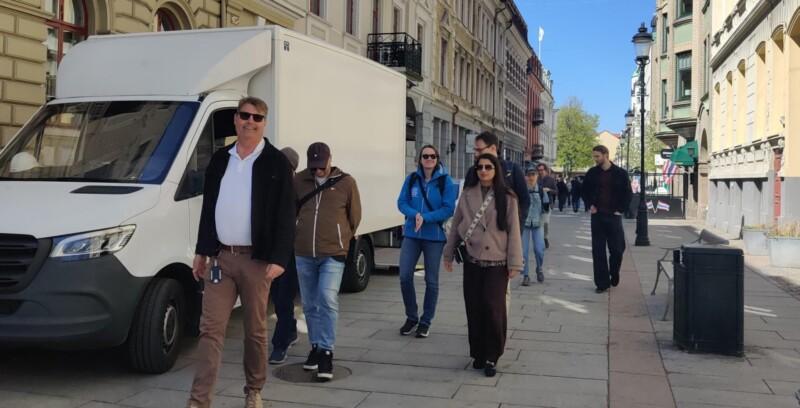
Figure: Consortium members exploring logistical challenges on the streets of Helsingborg.
The Helsingborg meeting marked an important step forward for the CO4HUB project as partners prepare for upcoming pilot activities across Europe. Insights gathered during the workshops will help shape practical models for urban logistics hubs that are financially sustainable, operationally effective, and adaptable to different urban settings.
The CO4HUB website is now live and will continue to expand with project updates, insights, and results as the collaboration progresses. For more information on the project Cooperation for Hubs in Urban Logistics (CO4HUB), please visit co4hub.eu.